
A Patient Response

There is a clever essay in Healthy Debate by Dr. Robert W. Marotta called "The Euphemism Economy: How Ontario health care learned to stop worrying and love the hallway."
I appreciate this tongue-in-cheek essay, which shows the ridiculousness of terms dreamed up by people in suits sitting around a boardroom table. I'm going to add to the essay, as it is missing important perspectives - the effect of these terms in real life, to real people, like patients and clinicians.
I cannot speak for clinicians, but I will add my own perspective as a patient and caregiver.
Patients have the POV that is sorely missing at the health policy, research and decision making tables. And, being cheeky here, the patient perspective is missing at editorial tables where essays like this are published.
Here are the terms that Dr. Marotta discusses in his essay, and the added human perspective:
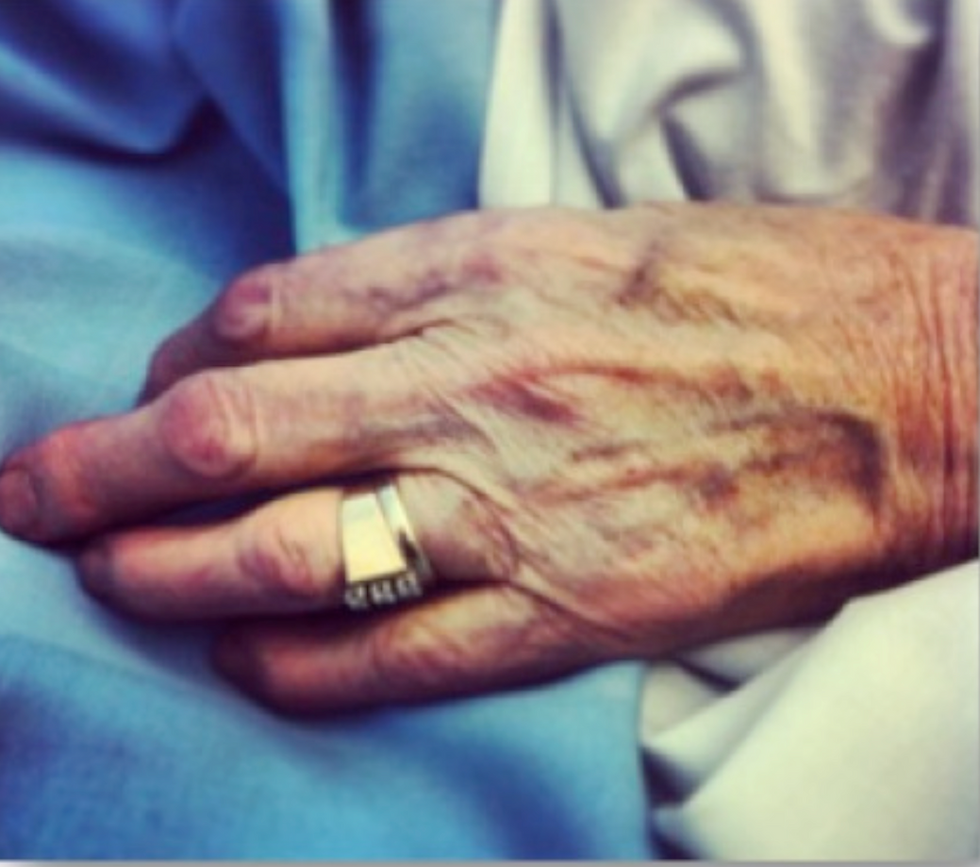
Hallway Medicine: Your grandma is stripped of dignity and privacy and her hospital bed is in the hallway. They put a number above her bed to pretend it is a room. If she's 'lucky' she has a movable curtain; otherwise she's lying in the hallway in a gown covered by a thin blanket for all to see, with staff and carts rumbling past her all day and night. When a clinician comes to see her, everybody can hear the conversation. There is no washroom nearby. There's no room for visitors to be at her side. I've written about the indignities of hallway health care here.
Left Without Being Seen: Nobody wants to go to the emergency department (ED). People think they have an emergency when they go to the hospital (even if clinicians don't consider it urgent). The phrase 'Left Without Being Seen' means that someone who is stressed + suffering in some way has placed their faith that the hospital will help them. They sit for hours in a crowded and chaotic waiting room without being called. They realize the betrayal that nobody is going to help them - and they go home. How many people die at home? How many people end up back in Emergency? Who knows? In health care, what isn't counted doesn't count.
Code Gridlock: For patients, this means you are in an ambulance in distress and the ambulance has to drive around to find a hospital that will take you. Or you've waited months or years for a surgery for a condition that causes you pain or distress. You finally have a surgery date, and rearrange your life for it - take time off work, arrange childcare, lay awake in anticipation of it - and your surgery gets cancelled at the last minute.
Capacity Zero: You are sick enough to be in the hospital, but the hospital won't admit you and you get send home. What happens to you there? Fill in the blank - you try to function in pain without proper pain medication, you live alone and nobody cares for you, you fall/get worse/can't eat/get dehydrated - generally you are left to suffer.
Alternative Level of Care: This one really bugs me as the system talks about patients blocking beds. Some people are in the hospital because they have nowhere to go. They have no home, there are no supports at home, or long term care or home care is so inadequately funded that it cannot help them. None of this is a patient's fault. The responsibility sit squarely on the system's shoulders, but please remember that it is PEOPLE who created this system. So a human being is responsible for cutting back on hospital staffing and home care or long term care funding. A real person with a red pen is sitting in the capital city of your province, gleefully cutting costs in name of austerity.
Virtual Care: Pretending that you can offload health care onto technology defeats the purpose of health care, which is about humans caring for other human beings. No I don't need another app. I don't want your AI 'solution'. I need a person. I have a laptop and an Internet connection and a home to sit in... what about people who don't?
Temporary ED Closure: You have an asthma attack and can't breath, or get hit by a car and are bleeding, or are having a heart attack... and your Emergency Department is closed. You fill in the blanks as to what the effect on patients is here....
Surge Capacity: No nurse comes when you press your call button because the staffing ratios mean nurses are so overrun with work that they are missing their meals and bathroom breaks. After surgery, you ring and ring your bell and nobody comes and you eventually get out of bed to go to the bathroom unassisted and fall and lay on the cold dirty floor in a puddle of your own urine waiting for someone to stumble upon you and help you up.
Enhanced Discharge Planning: The obsession with LOS (length of stay) continues. See #5. What if you have nobody to help you at home? Can't pay for private home care (so much for Canada's 'free' health care). You fall, your wound gets infected, you relapse... and end up back in ED. The revolving door of health care continues, but nobody takes a long view of personal or moral cost for patients, so who cares.
Integrated Care Pathways: My own breast cancer diagnosis took four months to be delivered...when the standard of care is two weeks. I'll just leave that there, but the fact is patients are suffering - physically, emotionally and mentally - during the wait times, and absolutely nobody cares for us while we are waiting. What is the point of a standard if you always whizz past it?
Dashboard Delusion: These euphemisms about health care administrators' obsession with counting things all fall into one category - from a patient perspective, the important things aren't on the dashboard: patient experience, which include suffering, worry, stress, respect, dignity, and kindnesses. And hugs. Nobody counts the hugs.
I appreciate the messages where people check if I'm okay because I seem mad. I AM MAD. I am mad that the human cost to all this corporate BS of a health system built on efficiencies instead of caring is always overlooked. The more we sink into crisis, the more our suffering is ignored.
Patients aren't supposed to be mad. We are supposed to be well-behaved and compliant. If you are a patient or caregiver, I give you permission to be mad. Be mad at the right people, and that isn't the staff at point of care.
Be mad you fund this health care system as a tax payer and that you have absolutely no say in how it is run. Be mad that your grandma is laying in the hallway. Be mad that you are waiting for cancer surgery, awash in fear.
Be mad and channel that rage into action when you can. The patient perspective is overlooked, so shout it from the rooftops. Give feedback. Insist on representation at decision-making tables. Take the microphone at conferences. Start your own blog like I did so you don't have to wait for permission from an editor to get published.
Patients - who are already sick, stressed and suffering - shouldn't have carry the heavy burden of advocacy. But alas that is the health care world we live in now.
Power to the people, not to the suits.



Comments